The Attendance Crisis Is a Trust Crisis: Five Democratic Experiments for 2026

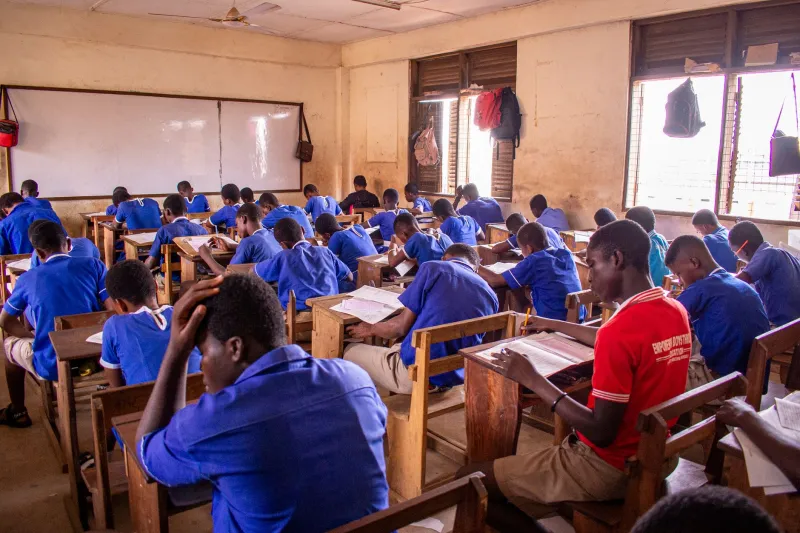
Photo: Richard Sutcliffe, CC BY-SA 2.0, via Wikimedia Commons
Attendance has become the policy issue that everyone agrees is urgent and almost no one agrees how to solve. The national conversation loops through fines, truancy sweeps, data dashboards and the language of enforcement. Persistent absence remains stubbornly high. Schools are under pressure to get pupils back into classrooms, and the Department for Education expects robust systems for tracking and following up absence.
All of that matters. But the attendance debate is too often framed as a compliance problem: if we tighten the rules, the numbers will improve. That framing misses something important. For many pupils, attendance is a trust problem. They do not believe that school is for them, that adults will listen, or that turning up will change anything. A democratic reboot would not replace accountability. It would give accountability a better chance of working.
Here are five practices UK schools could pilot in 2026. Each is concrete, each is safeguards-friendly, and each treats pupils as participants rather than problems.
1. Student-led attendance reviews
Instead of only adults analysing registers, a trained panel of elected pupils could examine anonymised attendance patterns and talk to peers about barriers. They might identify transport failures, anxiety at transition points, curriculum irrelevance or a lack of quiet space. The panel would not handle individual casework. It would report themes to governors and senior leaders, who would publish a response within a fixed period. Safeguards: no personal data, a safeguarding lead in the room, and a clear distinction between pupil insight and pastoral decision-making.
2. Pupil panels on behaviour policy
Behaviour policies are often written for pupils rather than with them. A pupil panel could review how sanctions and rewards actually work in practice, where consistency breaks down, and which reasonable adjustments are missing. Governors would retain decision-making authority, but they would have to explain publicly which recommendations they accepted and why. Safeguards: a written remit, an equality impact assessment, and a sunset clause so the panel cannot become a permanent talking shop.
3. Flexi-schooling compacts
Flexi-schooling is not a free-for-all; headteachers must agree to it, and it should be used carefully. But a compact between the school, the family and the pupil can make part-time attendance more transparent. The compact could set out the timetable, the alternative provision, the review dates and the progress measures. Pupils would help design the arrangement, not simply receive it. Safeguards: safeguarding checks, local authority involvement where required, and a termly review with the option to end the arrangement if attendance or progress deteriorates.
4. Elected belonging ambassadors
Attendance is relational. A pupil who feels missed is more likely to return than one who feels chased. Elected belonging ambassadors could welcome returning pupils, run transition activities and help shape the school's social climate. They should not police their peers or act as attendance enforcement officers. Safeguards: training, supervision, and a clear boundary between peer support and pastoral casework. Success should be measured through wellbeing and attendance, not through the number of pupils caught.
5. Climate juries with a small budget
A randomly selected pupil jury could review one aspect of school climate — break times, toilets, homework or belonging — and allocate a small participatory budget. This is deliberative democracy, not a wish list. The jury would hear evidence, question staff and make recommendations to governors. Safeguards: published minutes, a governor sponsor, and a budget small enough to be safe but large enough to matter.
How to pilot without losing accountability
None of these practices requires schools to surrender control. They require schools to share power deliberately. Four principles should apply. First, write a clear remit: what the group can and cannot decide. Second, protect safeguarding and data: no individual casework, no confidential pupil data, no unsupervised access. Third, keep governor oversight: every pilot should report to a named committee. Fourth, publish metrics and include a sunset clause. If a pilot does not improve trust, attendance or pupil confidence, stop it.
The prize is not pupil control. It is shared responsibility. A school that listens to pupils about attendance is not going soft on truancy. It is building the legitimacy that makes harder conversations possible. In 2026, that is the reboot the attendance debate needs.