At the Kitchen Table: A Safeguarded Voice for Home-Educated Children
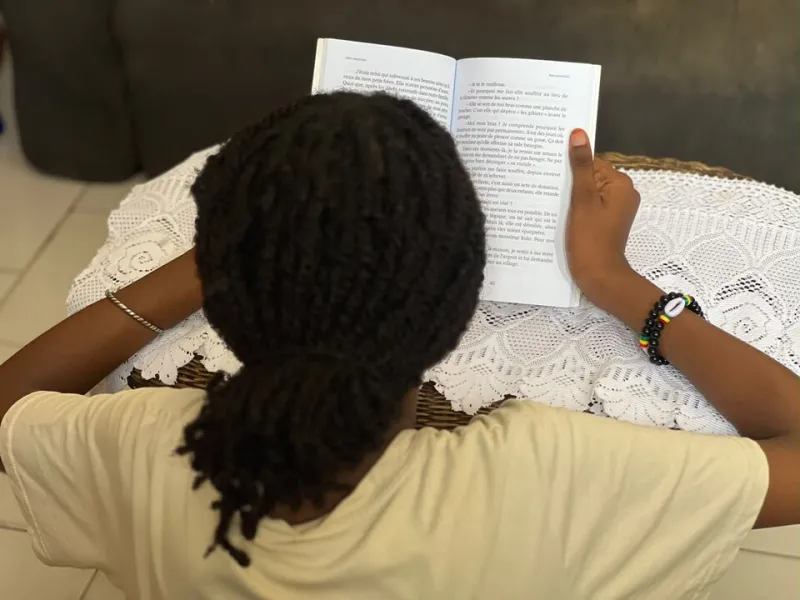
Photo: Wuzyprod, CC0, via Wikimedia Commons
The debate about elective home education in England is usually conducted between adults. Parents defend their choice. Local authorities describe the difficulty of knowing who is being educated at home. Ministers propose registers and duties. Campaign groups warn of surveillance. All of these voices matter. But the child at the kitchen table is often missing from the conversation, treated as the object of a decision rather than a person with views about their own education. In 2026, as policy makers return to the question of children not in school, that omission should be corrected.
A debate about adults
Home education is not a single phenomenon. It includes families who choose it for philosophical reasons, families who withdraw a child after a bad experience, families who are waiting for a school place, and families whose circumstances are chaotic. Some children thrive at home. Some are isolated. Some move between home education and school more than once. A policy that treats all home educators as heroes or all as suspects will fail, because it will not see the child in the middle of the arrangement.
The current debate tends to focus on registration. Local authorities say they cannot fulfil their safeguarding and education duties if they do not know which children are not in school. Home educators say that registration can feel like a gateway to intrusion. Both concerns are legitimate. But registration alone is a administrative answer to a human question. It tells us that a child exists in a database. It does not tell us whether the child has a say in what happens to them.
The child as a rights-holder
The United Nations Convention on the Rights of the Child, which the UK has ratified, establishes that children have the right to express their views in matters affecting them and to have those views taken into account according to their age and maturity. Education is plainly such a matter. A child who is educated at home is not a passive recipient of a parental philosophy. They are a person with a growing interest in their own future, friendships, qualifications and independence.
This does not mean that children should be asked to adjudicate between their parents and the state. It means that a safeguarded system should create a route through which a child can speak, ask questions and raise concerns without being cast as disloyal. That route must be designed with care. It should not be a helpline that routes every call into a safeguarding investigation. It should not be a survey that asks children to report on their parents. It should be a trusted, independent and child-friendly space where voice is possible and where the limits of confidentiality are clear.
A safeguarded route
Local authorities could establish a voluntary home education pupil voice offer. The offer would be explained to families at the point of registration or annual review. It would include a named contact who is independent of any decision about enforcement. The contact would be able to answer questions about the child's education, signpost to alternative schooling partnerships and listen to the child's views. The child could choose to use the offer or not. Parents would be aware of it, but the conversation would not be used to build a case against them unless a specific welfare concern arose.
Safeguards would be essential. The child should be told, in age-appropriate language, what would remain confidential and what would not. Any information shared should be proportionate and recorded accurately. The child should be able to bring a trusted adult if they wish. The route should be available to children with special educational needs and disabilities, including those who communicate non-verbally. It should not depend on a child being able to write a formal submission or navigate a council website alone.
What alternative schooling can offer
Democratic and alternative schooling projects already work with home-educated children in a variety of ways. Some offer part-time provision, some run forest school sessions, some provide GCSE support, and some act as a social hub. These settings are often better placed than a local authority office to build trust with a child who has had a difficult experience of school. They can offer a bridge between home education and formal provision without demanding that a family abandon its choices.
Local authorities should partner with such settings rather than treat them as competitors. A partnership could include a pupil voice forum for home-educated children, facilitated by an independent organisation and funded through a modest local offer. The forum could discuss curriculum, wellbeing, transitions and access to exams. It could feed into annual reviews of local home education policy. It would not give the local authority a veto over home education. It would give children a route into the conversation that shapes the support around them.
The limits of voice
Voice is not a substitute for resources. A child who wants to study for GCSEs at home still needs access to exam centres, tutors and materials. A child who wants to return to school still needs a place. A child who is isolated still needs social contact. A safeguarded voice route can identify those needs, but it cannot meet them on its own. It must be connected to practical provision, and it must be honest about what it can and cannot change.
Nor should voice become a new condition of approval. Home-educating parents should not be required to prove that their child has participated in a consultation in order to satisfy the local authority. The child's voice is a right, not a compliance tool. It should be offered, resourced and respected, but never used as a tick-box that legitimises a decision already taken.
The policy debate will continue to be dominated by adults, because adults hold the legal duties and the budgets. But a democratic education system should be capable of hearing the child at the kitchen table without turning the conversation into an investigation. That is the test of whether pupil voice is a genuine principle or merely a slogan for schools. Home-educated children are pupils too, even when there is no register, no bell and no classroom door.