Before the Door Closes: A Due Process Settlement for School Exclusions
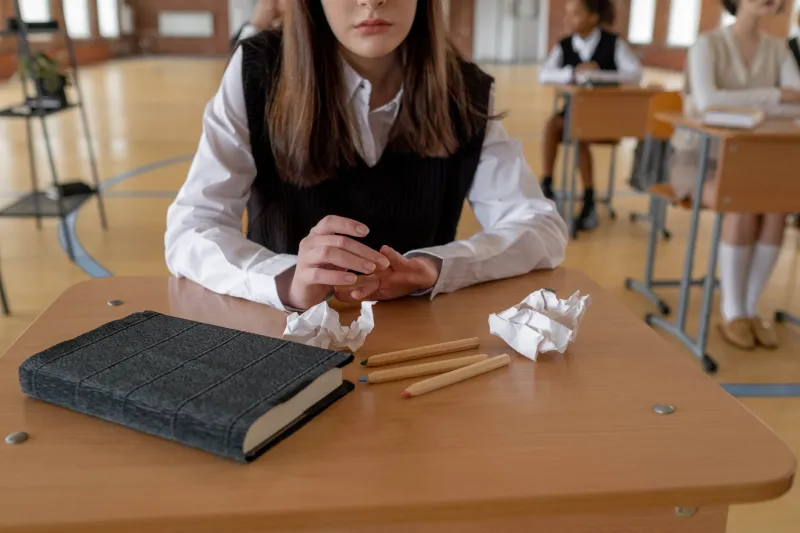
There is a particular silence at the centre of school exclusion. A decision is taken about a child's education, their friendships, their examination prospects and, in too many cases, their route through the rest of their schooling — and the child themselves is often the least consulted party in the whole process. Their parents may make representations. The governing board may review. An independent panel may, in narrow circumstances, be asked to look again. But the pupil at the middle of it all is routinely spoken about rather than spoken to.
That is not a scandal of individual cruelty. It is a structural gap, and structural gaps are precisely the kind of thing governance is supposed to close.
A decision of consequence, made without the person most affected
The figures confirm what school leaders already know: suspensions in England run to very large numbers each year, and permanent exclusions, though far rarer, still remove several thousand pupils from mainstream settings annually. Behind each entry in the departmental statistics is a child who, at the point of maximum crisis, is handed the least agency they will ever have.
The statutory guidance on exclusion invites headteachers to take account of a pupil's views where this is practicable. That word — practicable — does a great deal of work. In a busy school, at the end of a difficult day, with statements still to be taken and a parent on the phone, seeking a structured account from the pupil is the first task to fall away. And even where a headteacher does ask, there is no prescribed form the answer should take, no guarantee it will be recorded, and no obligation to show the child what has been written down about them.
Worse, the appeal architecture offers the pupil no standing at all. An application to an Independent Review Panel must ordinarily come from a parent. A fourteen-year-old with a considered view about their own conduct and context cannot, in their own right, ask for the decision to be reconsidered.
What democratic schools already understand
It is striking how many schools outside the mainstream have solved this problem in advance. In settings built around school meetings and shared rule-making, a serious incident does not trigger a private judgement by one adult. It triggers a process: an account gathered from everyone involved, a hearing in front of a body with real authority, a decision that is reasoned and written down, and a route back in that is planned rather than improvised.
These schools are not soft. Many of them enforce their rules more consistently than mainstream comprehensives precisely because the rules belong to the community rather than to a leadership team. What they demonstrate is that due process and high expectations are not opposites. They are mutually reinforcing: pupils accept a sanction they have watched being arrived at fairly, in a way they resent a sanction pronounced from on high.
The restorative tradition in English schools has made the same point for two decades. Conferencing works. The difficulty is that it is usually deployed after the exclusion rather than instead of the haste that produced it.
Four building blocks for 2026
A reform settlement does not need primary legislation. Much of it can be achieved through revised statutory guidance and a model policy that trusts and governing boards adopt voluntarily. It should rest on four elements.
A written pupil statement
Before any suspension beyond a defined threshold, or any permanent exclusion, the pupil should be entitled to submit a written statement in their own words, supported by a template and by an adult of their choosing. This is not a right to obstruct. The headteacher retains the decision entirely. But the statement must be recorded, considered and acknowledged, and it must form part of the record that governors see.
An independent advocate
Every pupil facing permanent exclusion should have access to an advocate who is independent of the school — drawn, perhaps, from a local authority service, a commissioned advocacy organisation or a trained volunteer pool. The advocate's job is not to argue that a sanction be dropped. It is to ensure the pupil understands the case against them, can respond to it, and knows what happens next. This is ordinary administrative justice, of the sort we would expect in any other public decision affecting a young person's entitlements.
A restorative reintegration conference
For fixed-term suspensions, the return to school should be planned rather than merely resumed. A short conference — pupil, parent or carer, the member of staff involved where appropriate, a trusted adult — should agree what changes, what support is provided and what the pupil can expect from the school. Reintegration is where exclusions are either made meaningful or quietly allowed to become the first step towards a permanent exit.
Reporting to governors
Governance is where this either becomes real or evaporates. Governing boards should receive an annual report on exclusions and pupil voice: how many pupils submitted statements, how many were supported by an advocate, how many reintegration conferences took place, and how outcomes differ by pupil characteristic. A board that cannot say how often pupils were heard cannot claim to be overseeing behaviour policy at all.
Voice is not veto
It should be said plainly, because critics will not say it fairly: none of this weakens a school's authority to remove a pupil who is a danger to others or whose presence makes learning impossible. The headteacher still decides. Timelines still run. Emergency arrangements still apply where safeguarding demands immediate action.
The distinction is between voice and veto, and it is a distinction pupils understand perfectly well. What they object to is not that decisions are made — it is that decisions are made about them in a room they are not in, on the basis of a record they have never seen.
As the Department for Education continues its work on behaviour, attendance and alternative provision, and as the Children's Wellbeing and Schools Bill reshapes the accountability landscape, there is an obvious opening. A short addition to the exclusion guidance, a model pupil statement, a funded advocacy pathway and a reporting requirement for boards would cost little and change a great deal.
The door out of a school should never be the first point at which a pupil is asked what they think. Due process is not a concession to poor behaviour. It is the mark of an institution confident enough to explain itself.