The Timetable Gap: Why Pupil Voice Needs Hours, Not Honours
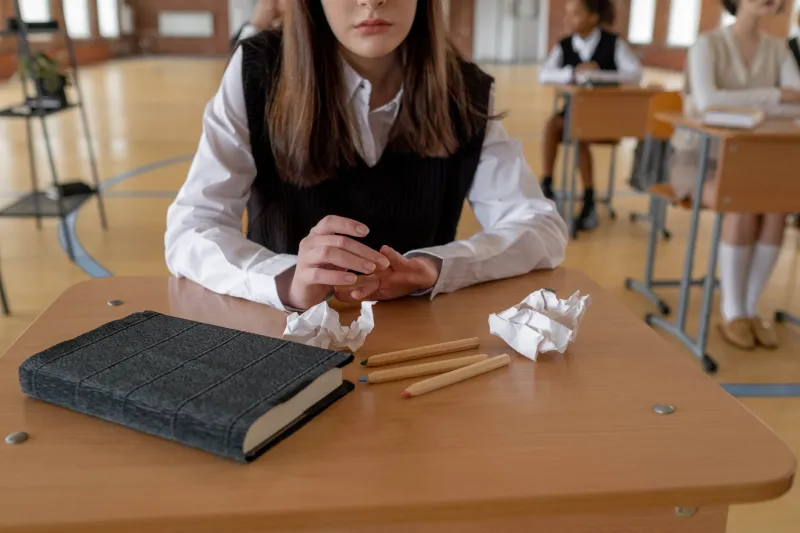
As schools approach the end of the autumn term, many will find a moment to celebrate pupil leadership. There will be certificates, photographs and perhaps a mention in the headteacher's newsletter. None of this is worthless. Recognition matters, particularly for pupils who have given up lunchtimes, free periods and evenings to represent their peers. But recognition is not the same as provision. Across the UK, school councils and pupil leadership roles continue to rely on a hidden subsidy: the unpaid time of the pupils themselves.
That subsidy is rarely acknowledged in governance documents. A school may have a pupil voice policy, a council constitution and a named staff lead. It may not have a time budget, a training plan, an expenses policy or a safeguard against participation becoming a privilege reserved for the already confident and the comfortably off. The result is a familiar pattern. Consultations are held at short notice. Minutes are taken by the most literate pupil in the room. Surveys are completed by those with a phone and a data allowance. Meetings clash with revision sessions, part-time jobs or caring responsibilities. Pupil voice becomes another arena in which advantage compounds advantage.
The cost of being consulted
School councils have a long history in the UK, and their best versions are genuinely democratic: elected members, regular meetings, minutes, feedback to constituents and a route into decisions about the school environment, teaching and learning, and behaviour policy. But the labour involved is real. A councillor may attend fortnightly meetings, gather views from tutor groups, draft proposals, sit on interview panels, contribute to working groups and report back to the governing board. In a large secondary school, that can amount to several hours a month. In a sixth form or further education college, it can be more.
None of this labour is usually counted. It is fitted around the timetable rather than into it. Pupils are expected to sacrifice the margins of the school day because the margins are where pupil voice has traditionally lived. That expectation is not neutral. It advantages pupils whose families can absorb the opportunity cost, who have reliable transport, who do not need a part-time job, and who do not face the additional barriers that come with special educational needs or disabilities, caring responsibilities or insecure housing.
From badge to budget
The reform needed is not a grand new bureaucracy. It is a shift in how schools account for participation. If a school believes that pupil voice is part of governance, then it should appear in the timetable and the budget in the same way that other governance functions do. That means a named time allocation: perhaps a rotating release from lessons for council meetings, or a protected slot within tutorial or enrichment time. It means a training programme, not just a handover pack. It means an accessible expenses policy covering travel, printing and digital access, with a simple process that does not require a pupil to ask a parent for money upfront.
These are practical measures, but they carry a democratic argument. A school that treats pupil voice as unpaid work is implicitly saying that participation is a hobby. A school that treats it as protected work is saying that pupils are members of the school community with legitimate governance responsibilities. The difference matters for the quality of decisions as well as for equity. Councils that meet at lunchtime after a morning of lessons are tired. Councils that receive training in minutes, budget literacy, safeguarding and facilitation produce better evidence and stronger proposals. Councils whose members are not drawn only from the most confident speakers are more likely to notice what the school is missing.
A protected-time model
A workable model has four elements. First, role descriptions. Every pupil leadership role should have a written description setting out expected hours, tasks, lines of accountability and the limits of the role. No pupil should be asked to commit to an open-ended arrangement. Second, timetable recognition. Schools should identify protected time for meetings and consultation, and should ensure that pupils are not penalised for missing lessons where release is agreed. Where release is unavoidable, catch-up arrangements should be planned in advance rather than left to the pupil.
Third, training and support. Pupils need induction in how meetings work, how to gather views ethically, how to write minutes and how to handle sensitive information. They also need a named staff contact and a clear safeguarding route. Fourth, expenses and access. A small participation fund can cover bus fares, printing, phone data and childcare where necessary. It should be published, simple and non-stigmatising. Schools should also offer remote and asynchronous ways to contribute, so that participation does not depend on being physically present at a particular hour.
Safeguards, not just opportunities
Protected time must not become pressure. Some pupils will want to take on leadership roles; others will not. A democratic school should make participation possible without making it compulsory or competitive. That means capping hours, rotating roles, ensuring that meetings do not routinely run over, and giving pupils a route to raise concerns about their treatment. It also means recognising that pupil voice is not a substitute for adult accountability. Councillors can advise, scrutinise and propose, but governing boards and headteachers remain responsible for decisions. Clarity about that boundary protects pupils from being used as cover for difficult choices.
What governing boards should ask
Governors and trustees have a direct interest here. They can ask whether the school's pupil voice policy includes a time allocation, a training plan and an expenses policy. They can ask how the school ensures that councillors are representative of the pupil body, including pupils with special educational needs and disabilities, pupils eligible for free school meals and pupils with caring responsibilities. They can ask what happens when a pupil misses a meeting because of transport or family commitments. And they can ask whether pupil contributions are fed back to the pupils who provided them, with a clear account of what changed and what did not.
These questions are not administrative niceties. They go to the heart of whether pupil voice is a genuine part of school governance or a decorative extra. In 2026, with budgets under pressure and attention on attendance, behaviour and curriculum, it is tempting to treat participation as a voluntary add-on. But democratic education is not built in the gaps. It is built when schools decide that pupils' time has value, and that the work of representing a community deserves the same seriousness as any other form of governance.