Small Democracy, Real School: Pupil Power Without the Fee or the Famous Name
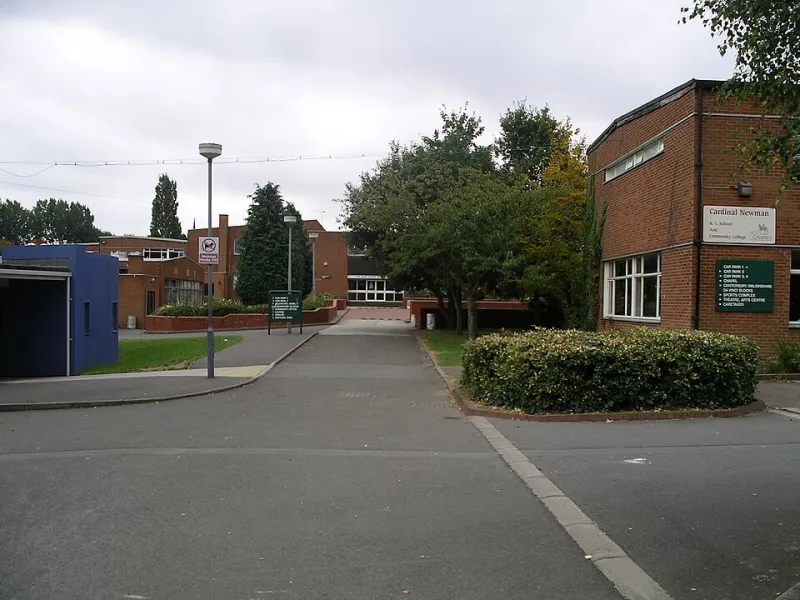
Photo: Snowmanradio, CC BY-SA 3.0, via Wikimedia Commons
Democratic education has an image problem. In the public imagination it belongs to famous independent schools with radical timetables, residential communities and the freedom to abandon the national curriculum. That inheritance matters, and the pioneers deserve their place in the story. But it has allowed policymakers and school leaders to treat democracy in education as a luxury: admirable in a fee-paying setting, impractical in a comprehensive with GCSE pressure, staffing shortages and an Ofsted inspection on the horizon.
That framing is both historically lazy and politically convenient. Ordinary state schools have always practised democracy, even if they have not called it that. School councils, mock elections, eco committees and peer mentoring are familiar features of mainstream life. The question is not whether democracy exists in comprehensives. It is whether it has any consequence.
The fee-paying shadow
The association with fee-paying progressivism is not accidental. A. S. Neill’s Summerhill, founded in 1921, remains the most cited example of democratic schooling in the English-speaking world. Its influence is real, but it is also misleading. Most democratic education does not require a residential community, a radical timetable or private fees. It requires a credible transfer of influence over decisions that pupils can reasonably help to shape.
In a mainstream school, that means working within constraints rather than pretending they do not exist. The national curriculum stays. Examinations stay. Safeguarding and statutory duties stay. What changes is the assumption that adults must always design the rules, set the terms of debate and then invite pupils to react. Democracy in an ordinary school is not a parallel universe. It is a set of small, cumulative practices that make pupil voice consequential.
Co-writing the behaviour policy
Behaviour is the clearest test. Too many behaviour policies are written for pupils and then explained to them. A democratic school does something different: it runs structured workshops in which pupils examine the existing policy, identify where it is unclear or inconsistently applied, and propose improvements. This is not a invitation to write rules that avoid consequences. It is co-production of clarity, consistency and restoration.
Pupils notice things adults miss: the corridor where sanctions feel arbitrary, the teacher who explains a detention while another does not, the pastoral support that is promised but hard to find. A co-written behaviour charter can keep the school’s statutory responsibilities intact while making the policy more intelligible and more legitimate. The governing board still approves it. The headteacher still enforces it. But pupils have helped to shape it, and they can see their contribution in the final document.
Assemblies with purpose
Student-led assemblies are another small lever with surprising reach. Too often they are performances: a presentation on recycling, a reminder about uniform, a celebration of achievement. A democratic assembly cycle is different. Pupils present evidence on an issue they have researched—homework load, mobile phone rules, access to water, the quality of school meals—and then take questions from leaders as well as from their peers. The assembly becomes a public accountability forum rather than a stage.
The format matters less than the follow-up. If pupils raise an issue and nothing changes, the exercise teaches cynicism. If leaders respond with reasons, timelines and published decisions, it teaches something more valuable: that democratic participation involves argument, evidence and negotiation, not simply complaint.
Scrutiny, not decoration
Pupil scrutiny of school policies is the most underused form of voice in mainstream schools. A student policy review group can examine homework, assessment, uniform, mobile phones or the use of internal exclusions. It should receive real documents, have access to a governor or senior leader, and produce scrutiny notes that go to the governing board. Those notes need not be binding. They must, however, be read and answered.
This is where many school councils fail. They are asked to organise charity days and suggest improvements to the canteen, but they are not given the papers, the time or the status to examine policy. Scrutiny changes the relationship. It treats pupils as stakeholders with an interest in the quality of decisions, not as customers with preferences.
Small, credible, cumulative
None of this requires a dramatic overhaul. A school can begin with four practices: a termly policy scrutiny cycle, a co-written behaviour charter, a student-led assembly each half-term, and a published feedback loop that records what was heard, what changed and what did not. The last of these is essential. ‘You said, we did’ is useful only when it is honest. ‘You said, we did not, because’ is more democratic still.
The national curriculum does not need to be abandoned for any of this to work. Citizenship and PSHE can provide space for learning about democratic processes, but the practice must happen elsewhere: in tutor time, in council meetings, in assemblies, in governor meetings and in the ordinary conversations between pupils and staff. Democracy is not a subject. It is a way of running a school.
The limits of the mainstream
The constraints are real. Inspection frameworks reward certain kinds of evidence. GCSE pressure narrows the timetable. Staff workload limits the capacity for new initiatives. Safeguarding rightly places boundaries around what pupils can decide. A serious advocate of democratic education should acknowledge these limits rather than wish them away. The argument is not that comprehensives can become Summerhill. It is that they can become more democratic within their own terms.
That means designing for credibility rather than spectacle. A pupil panel that meets once and produces a wish list is worse than no panel at all. A scrutiny group that reads the behaviour policy, questions the deputy head and reports to governors is modest, unglamorous and potentially transformative.
Why 2026 matters
As 2026 draws to a close, trust in institutions is thin and the pressure on schools to prove that they belong to their communities is intense. Attendance and behaviour are not merely management problems. They are relationship problems. Pupils who believe that school is something done to them are less likely to invest in it. Pupils who have helped to shape a policy, question a decision and see a response are more likely to understand the institution as partly theirs.
Article 12 of the UN Convention on the Rights of the Child is clear that children have the right to express views and to have them taken into account. That right does not depend on fees, a famous name or a radical timetable. It belongs in the ordinary comprehensive, in the ordinary classroom and in the ordinary governors’ meeting.
Democracy does not need a fee. It needs a timetable slot, a facilitator, a promise to respond and governors willing to listen. The most democratic school in Britain may never call itself that. It may simply be the local comprehensive that decided to write its behaviour policy with the pupils rather than for them.