The Unheard Evidence: Training Pupils to Observe Their Own Schools
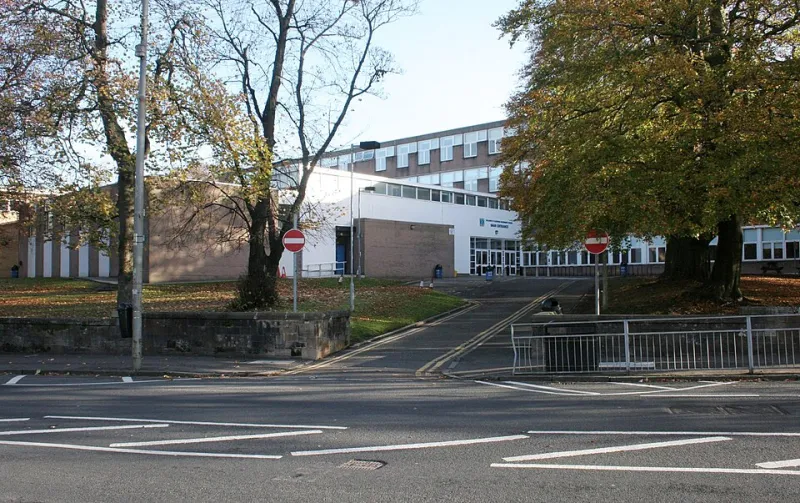
Photo: Richard Sutcliffe , CC BY-SA 2.0, via Wikimedia Commons
School inspection is, at its best, an exercise in triangulation. Inspectors read documents, observe lessons, scrutinise outcomes and speak to staff, governors and pupils. Yet the pupil strand often remains thin: a questionnaire completed under the gaze of a form tutor, a discussion with a hand-picked panel, or a corridor conversation that cannot be tested. As inspection practice continues to evolve in 2026, there is a case for something more structured. Not a survey gimmick, and not a new layer of surveillance, but a safeguarded pupil observer corps that gathers evidence for inspectors and school leaders in a disciplined, transparent way.
Why inspection needs a pupil evidence strand
The Education Inspection Framework asks inspectors to judge how well a school provides an ambitious curriculum, creates a calm and orderly environment, and ensures inclusion for all pupils. These are precisely the areas where pupils hold knowledge that adults may not. A senior leader can describe the behaviour policy; pupils can describe how it feels at the lunchtime pinch-point. A curriculum map can show breadth; pupils can explain which subjects are routinely squeezed out for revision. A SEND report can list provision; pupils can reveal whether support is stigmatised or whether reasonable adjustments are quietly withdrawn.
None of this means that pupil testimony should be treated as unvarnished truth. Children and young people, like adults, interpret experience selectively. The point is not to replace professional judgement with a pupil referendum. It is to add a structured, moderated source of evidence that can confirm, complicate or contradict the adult account. When inspectors are testing claims about culture and inclusion, that kind of triangulation matters.
What a pupil observer corps would actually do
The model should be modest and clearly bounded. A corps would consist of pupils in key stages 3 and 4, and in sixth forms where relevant, selected through stratified random sampling rather than by senior leaders. Selection should deliberately include pupils with SEND, pupils with experience of alternative provision, pupils from disadvantaged backgrounds and pupils who are not the usual council stalwarts. Training—delivered independently of the school leadership team, perhaps through a local authority, a multi-academy trust partnership or a civic organisation—would cover observation skills, consent, confidentiality, bias and safeguarding.
Their role would not be to grade teachers or to sit in on individual lessons as a pseudo-inspection. It would be to observe the school's public life: transitions, unstructured time, dining arrangements, access to extracurricular activity, the visibility of support services, and the messages sent by displays, communications and routines. They might keep short structured logs, take part in moderated evidence panels with inspectors, and help design pupil-level questions that are less susceptible to coaching. Their evidence would be reported thematically, with minimum group sizes and no identification of individual staff or pupils.
Crucially, the corps should also have a between-inspection function. School leaders could use pupil observers to test their own claims about belonging or behaviour before an inspector arrives. That is not a distraction from inspection; it is the kind of self-evaluation that governors should be demanding. The risk is that such work becomes performative. The safeguard is independent facilitation and a clear rule that observer evidence cannot be used for individual staff performance management.
Guardrails against coaching and reprisal
The most serious objection to pupil involvement in inspection is that it can be gamed. Schools may select articulate pupils, rehearse answers, or imply consequences for disloyalty. A random sample helps, but it is not enough. Recruitment should be independently overseen, training should include explicit work on how to recognise pressure, and inspectors should have the option of holding pupil sessions without school leaders present. Where schools run their own observer schemes, governors should review the sampling method and the complaints route.
Reprisal is the harder risk. Pupils who speak honestly about behaviour, bullying or exclusion can feel exposed, particularly in small schools or tight-knit communities. The corps therefore needs a pastoral wrapper: a named independent contact, a right to withdraw at any point, and a clear route for raising concerns about retaliation. Evidence should be aggregated before it reaches leaders. Individual pupils should not be named in inspection reports. And the programme should be evaluated not only for its usefulness to inspectors but for its effect on the pupils who take part.
There is also a risk of performative consultation dressed up as evidence. A pupil observer corps should not become a photo opportunity for a trust's annual report. If pupil evidence is gathered, it should be reported in a way that shows how it was weighted and where it conflicted with adult accounts. Inspectors should be trained to probe those conflicts rather than smoothing them away. Governors should ask to see the methodology, not just the summary.
A pilot worth testing in 2026
This is not a proposal for a national roll-out by diktat. It is a proposal for a careful pilot, independently evaluated, in a small number of schools and trusts. The costs are modest compared with the sums spent on external consultancy, and the potential benefits are civic as well as regulatory. Pupils would learn how evidence is gathered, how institutions are held to account and how to disagree without delegitimising the school. Inspectors would gain a source of evidence that is less dependent on the confidence of headteachers.
The test of credibility is simple. If a school is genuinely committed to pupil voice, it should be able to withstand structured pupil observation. If an inspection framework is genuinely interested in inclusion, it should be able to hear from pupils who are not usually invited to the table. The pupil observer corps is not a substitute for professional inspection. It is a way of making inspection a little more truthful.