The Consultation Record: Pupils as Witnesses to What a School Is
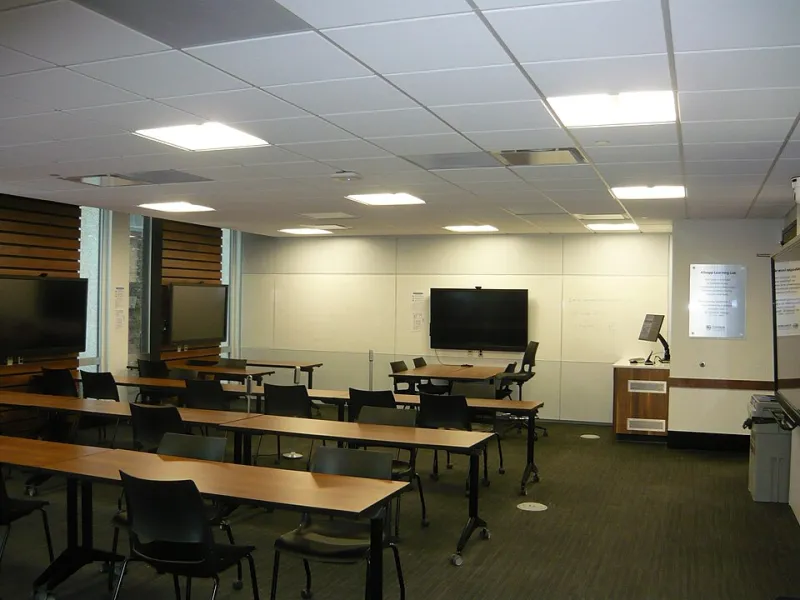
Photo: Canadian2006, CC BY-SA 4.0, via Wikimedia Commons
School reorganisation consultations have a familiar grammar. A local authority or academy trust publishes projections: falling birth rates, surplus places, the cost of keeping a half-full building open. Parents are invited to meetings. Staff are consulted. Governors are briefed. Pupils, meanwhile, appear in the paperwork as a row of numbers — pupil numbers, staffing ratios, travel times — rather than as people who know what a school actually does.
In 2026, with falling rolls placing more schools under review, that gap is no longer a minor omission. Merger, federation and closure proposals are exercises in public reasoning about institutions that shape children’s lives. If pupils are old enough to be moved, separated from teachers and friends, or sent across a town to a different site, they are old enough to have a formal and safeguarded place in the process. The argument is not that children should decide whether a school closes. It is that they should be able to testify to what would be lost, what would be gained, and how a transition should be managed.
From stakeholder to witness
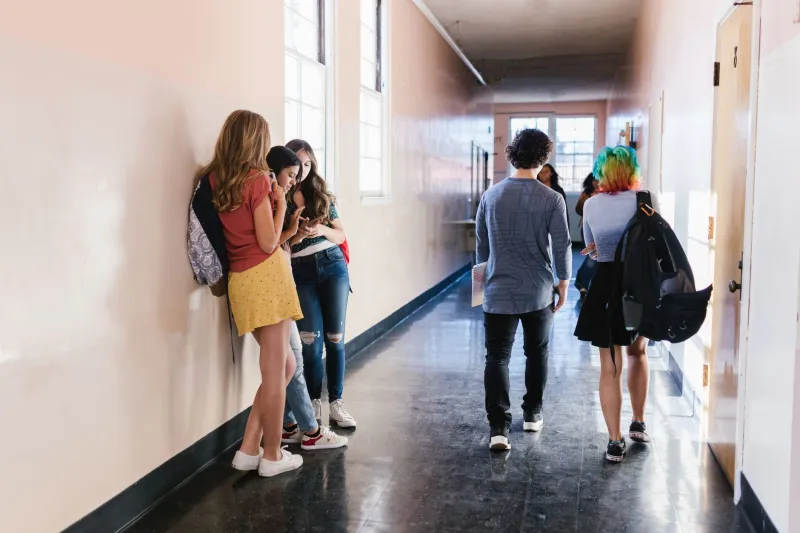
Consultation guidance in England and the devolved nations tends to treat pupils as a stakeholder group among many. In practice, they are often the group least able to attend evening meetings, submit formal responses or navigate the technical language of school organisation. Well-meaning invitations to ‘have your say’ can therefore produce a consultation that records adult anxiety and adult strategy while missing the institutional knowledge of those who spend their days in the building.
A more democratic approach begins by changing the question. Pupils should not be asked simply whether they favour a merger. That turns them into a pressure group and invites adults to dismiss their views as self-interested. They should be asked what they know: which spaces are used and when; how pastoral support actually works; which subjects depend on fragile staffing; what happens to pupils with special educational needs or who travel long distances; how a school’s identity is carried in its rituals, its corridors and its relationships.
That is the difference between consultation as market research and consultation as democratic evidence-gathering. Pupils are not a focus group. They are witnesses to the everyday operation of a public institution.
A safeguarded pupil panel
A formal pupil panel should be established at the start of any reorganisation review, not after proposals are already fixed. Its terms of reference should be published alongside the consultation timetable. Membership should be diverse by age, experience and need, with deliberate recruitment of pupils with education, health and care plans, pupils eligible for the pupil premium, care-experienced children and those in alternative provision or on distant journeys.
The panel should be independently facilitated — by a trained participation worker or an external organisation, not by the headteacher whose school may be at risk. Sessions should be opt-in, age-appropriate and closed to media. Pupils should not be asked to campaign, lobby or appear in local press photographs. Safeguarding, data protection and the right to withdraw must be built in from the beginning. The panel should produce a written submission in its own words, with support for those who need help to express themselves.
Crucially, the panel should have a defined route into the formal process. Its evidence should be received by the decision-making body, appended to the consultation report and referenced in the published summary. A pupil response document would not be a veto. It would be part of the record on which a decision is legitimately made.
The feedback loop must be legible
Too many consultation exercises end with a decision and a thank-you. A democratic process requires a feedback loop that shows what was heard and how it was weighed. For pupils, that means a published response to the pupil panel: which points were accepted, which were not, and why. The language should be plain. The document should be short enough to be read and specific enough to be trusted.
The test is not whether pupils feel thanked. It is whether they can trace their evidence into the final decision. If a pupil panel says that the proposed merger will sever a crucial link with a local further education college, the consultation report should say whether that concern was assessed. If pupils identify that a closure will lengthen journeys for a group of SEND pupils, the authority should show how that impact was mitigated. Transparency does not guarantee agreement, but it prevents consultation from becoming a ceremonial performance.
Not bargaining chips
There is a real danger in elevating pupil voice after a proposal has become politically charged. Children can be used as props: quoted by campaigners, paraded at protests or invited to make emotional appeals that adults would not ask of other witnesses. That is not democratic education. It is exploitation with a participation badge.
Safeguards must therefore be explicit. Pupils should not be asked to choose between loyalty to their school and loyalty to their community. They should not be placed in direct conflict with staff or parents. They should not be expected to carry the burden of defending an institution that adults have failed to resource or plan for. The panel should have access to independent support, and its evidence should be framed around learning, welfare and transition rather than victory or defeat.
A test for 2026 reviews
Each reorganisation consultation should be able to answer five questions. Was a pupil panel established before options were fixed? Was it independently facilitated and demographically representative? Was its evidence published and answered? Did it cover transition, transport, SEND, pastoral care and curriculum continuity? Were pupils protected from campaigning and media pressure?
If the answer to any of these is no, the consultation is not yet democratic. Falling rolls will not wait. Neither should the procedural imagination required to treat pupils as citizens of the school they attend. A school is not only a set of buildings and a budget line. It is a web of relationships, rituals and memories. When that is on the line, pupils should be in the record — not as statistics, but as witnesses.