The Building Teaches Too: A Pupil Mandate for School Rebuilding
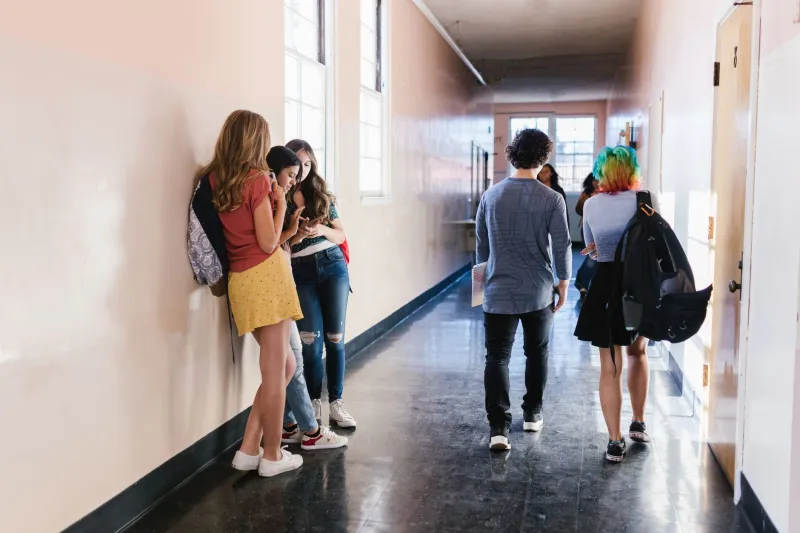
A school building is never a neutral container. Corridors regulate movement; acoustics determine who can be heard; toilets, thresholds and lunch halls teach lessons about dignity, supervision and belonging. As RAAC remediation and capital rebuilding continue across England in 2026, billions are being committed to environments that pupils will inhabit for years, but will rarely help design. That is a governance failure, not merely a missed consultation exercise.
The gap between user and author
Pupils are the principal users of a school, yet they are seldom treated as authors of its physical form. Consultation, where it happens, often arrives after concept designs have hardened. A student council may be shown images, invited to comment on colour schemes, or asked to endorse a finished plan. These are gestures, not influence. They do not touch the questions that matter most: where the quiet room sits, how accessible circulation works, whether the dining space can absorb a queue without swallowing the corridor, or whether the building feels safe at the end of the day.
The rebuilding programme is a rare opportunity. Capital projects are infrequent, and their consequences are durable. A decision taken now about lighting, layout or ventilation will shape the experience of schooling for a generation. If democratic education means anything, it must include the right to shape the shared spaces in which learning happens.
Why the current approach falls short
The weakness is structural. Capital funding conditions routinely demand evidence on energy performance, procurement and delivery timelines. They do not require evidence that pupils have helped define the brief. Post-occupancy evaluation is too often optional, retrospective or confined to facilities teams. Governors may never see a structured account of how a new building is actually working for the people inside it.
The result is a predictable gap between design intention and daily reality. Architects are asked to solve problems through drawings that pupils could have described from lived experience. Estates teams inherit a building that meets technical specifications but frustrates its users. Staff absorb the mismatch. Pupils learn that their environment is something done to them.
A statutory design mandate
The remedy should be statutory, but proportionate. Capital funding agreements should require three things. First, every project brief must include a pupil design jury report, produced before concept design is signed off. Second, post-occupancy reviews must take place at six and eighteen months after handover, with pupil evidence forming part of the record. Third, the governing body must receive both reports and publish a written response explaining which recommendations were adopted, which were not, and why.
This is not a pupil veto. It is a duty to involve, with reasons. Architects and estates professionals retain responsibility for safety, cost and compliance. Pupils contribute knowledge that no consultant can replicate: how the building is used at break, where crowding becomes anxiety, which entrances feel exposed, which spaces support SEND pupils and which quietly exclude them.
Design juries that are more than a show of hands
A pupil design jury should be selected through stratified random sampling, not simply drawn from the student council. Composition should reflect year groups, gender, SEND and accessibility needs, pupils in alternative provision, and those who are often least heard. The jury should meet four to six times, with a clear remit and a governor link.
The architect should present real constraints, not a fantasy menu. Pupils should see plans, budgets and trade-offs. A jury that is only asked what colour the walls should be will produce colour recommendations. A jury that is asked how the building should support independent travel, group work, privacy or quiet will produce a design brief.
Site walks and sensory audits
Consultation must move through the building, not sit in a meeting room. Site walks at different times of day reveal what drawings hide: the pinch point at the science corridor, the noise outside the hall, the smell near the bins, the queue that blocks the entrance. Younger pupils can map routes with drawings and stickers. SEND pupils can carry out sensory audits covering light, sound, texture and crowding. Interpreters, easy-read materials and assisted digital tools should be standard, not special pleading.
This is where democratic and alternative schools offer a practical lesson. Settings that already share authority over space tend to treat pupils as competent informants rather than decorative stakeholders. They do not hold a referendum on brickwork. They create routines in which learners help identify problems, test solutions and review outcomes. Mainstream capital projects can borrow that discipline.
Post-occupancy: the missing accountability
A building is not finished at handover. The post-occupancy review is where pupil voice becomes accountability. Pupils should compare the original brief with daily experience: Is the accessible entrance actually usable? Does the new hall improve dining or simply move the queue? Are the toilets safe and dignified? Did the quiet space become a storage room?
Governors should publish a short response and feed findings into the next estate strategy. Without that loop, consultation becomes a ceremony. With it, pupils learn that evidence matters and that institutions can be held to their promises.
The rebuilding programme will be judged in bricks and budgets. It should also be judged in whether pupils helped draw the school they inhabit. The question is not whether pupils have views about their buildings. They do. The question is whether the programme will record those views before the concrete sets.