What Stays on the Shelf: Pupil Custodianship and the School Library
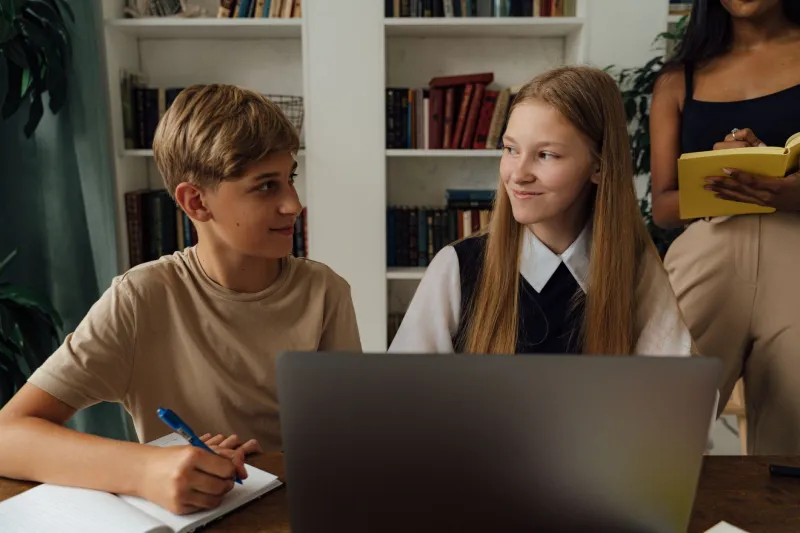
A school library is never only a room of books. It is a curated argument about what a school believes pupils can handle, deserve and become. The choice to stock a title, withdraw a worn copy, spend the budget on graphic novels rather than revision guides, or move a display from the corridor to the back wall is a decision about intellectual access. Yet in most schools these decisions are made by adults alone, often under pressure and rarely explained. In 2026, with library provision uneven and budgets tight, that silence is no longer tenable.
A Commons, Not a Cupboard
Pupil voice in libraries is often reduced to a suggestion box by the issue desk or a reading group that meets once a half-term. Both have value, but neither touches the governance of the library. A pupil library committee is a different proposition. It is not a book club with a budget; it is custodianship. Pupils would advise on stock selection, spending priorities, displays, opening hours, digital resources and requests to reconsider titles. They would not hold a veto over safeguarding or operational matters, but they would be inside the conversation rather than outside the door.
The case rests on the nature of the space. The library is one of the few places in a school where pupils meet ideas beyond the syllabus, chosen not because they will be examined but because they might be read. When pupils help curate that space, they learn that selection is an argument, not a decree. They also learn something harder: that a library belongs to a community, and that a commons requires custodians, not just customers.
The False Choice Between Freedom and Safeguarding
Debates over challenged titles often present schools with a binary. Either adults protect children, or pupils read freely. That is a false choice. Safeguarding is not the same as removing every book that discomforts an adult. Intellectual freedom is not the same as abandoning judgment. A democratic protocol can hold both, provided it distinguishes between an objection and a removal.
A reconsideration request should trigger a review, not an automatic withdrawal. The panel should ask whether a title is age-appropriate, whether it has literary or educational merit, whether it is relevant to the curriculum or to pupils' interests, whether it is available elsewhere in the school, and whether there is a specific safeguarding concern that cannot be met by guidance, display context or restricted access. Some material will not be suitable for a school library. But those decisions should be reasoned, recorded and reviewable. A book should not disappear because one complaint arrived on a Friday afternoon.
How to Constitute a Library Committee
A committee that is hand-picked by senior leaders will be treated as a focus group. A committee that is elected but untrained will struggle to exercise judgment. The practical model lies between the two.
Membership should include elected representatives from each year group, co-opted pupils including those with special educational needs and disabilities, pupils eligible for the pupil premium, and pupils who rarely use the library. The librarian should sit as a professional adviser, with a link governor and a member of the senior leadership team attending as necessary. Pupils should chair the meetings, with support for minute-taking and agenda-setting. Terms should be fixed, perhaps one academic year with the option of a second, to prevent a clique forming.
Training matters. Pupil members need a plain-English introduction to confidentiality, safeguarding, book selection and the school's legal duties. They also need to understand that a library committee is not a complaints tribunal for personal grievances. Its remit is the health of the collection and the life of the space. Meetings should be held at least half-termly, with agendas published in advance and minutes published afterwards in anonymised form. The library budget should be presented in a form pupils can scrutinise: not a single figure, but a breakdown of spend on fiction, non-fiction, digital resources, periodicals and replacement stock.
A Reconsideration Protocol That Can Bear Publication
A transparent protocol is the safeguard that makes pupil involvement credible. It should begin with a simple form, available to pupils, parents and staff, asking which title is being challenged, on what grounds, and what outcome the requester seeks. The librarian should acknowledge the request within five school days. Unless there is an immediate safeguarding concern, the title should remain available while the review takes place.
An immediate restriction should be possible, but only with written reasons from the headteacher and a review within ten school days. That prevents a temporary measure becoming a quiet removal.
The panel should meet within twenty school days and include the librarian, two pupil committee members, a governor and a member of staff with safeguarding knowledge. The pupil members should not sit in judgment on a complaint from a close friend or family member. The panel should apply published criteria, record its reasoning and issue a written decision. The headteacher retains legal accountability, but a decision to remove a title should be published, with reasons, and subject to appeal to the governing body. An annual report should summarise requests, outcomes and stock changes, so that patterns can be seen.
What the School Gains
A library committee will not save a library from cuts. It cannot conjure a librarian where none is employed or repair a budget that has been stripped. But it can strengthen the case for both. A school that can show pupils are involved in curating the collection, allocating resources and resolving disputes has a better claim on the public value of the library than one that treats the space as a storage cupboard with opening hours.
The gains are practical as well as civic. Stock is more likely to be borrowed when pupils have helped choose it. Disputes are less likely to become rumours when there is a published process. Pupils learn how to weigh evidence, hear objections and make decisions that bind a community. And the library becomes what it should be: not a vault of approved titles, but a commons of readers, curators and citizens.
The question is not whether pupils should have a say in the school library. It is whether a school can justify keeping them outside a conversation that shapes what they are allowed to read.